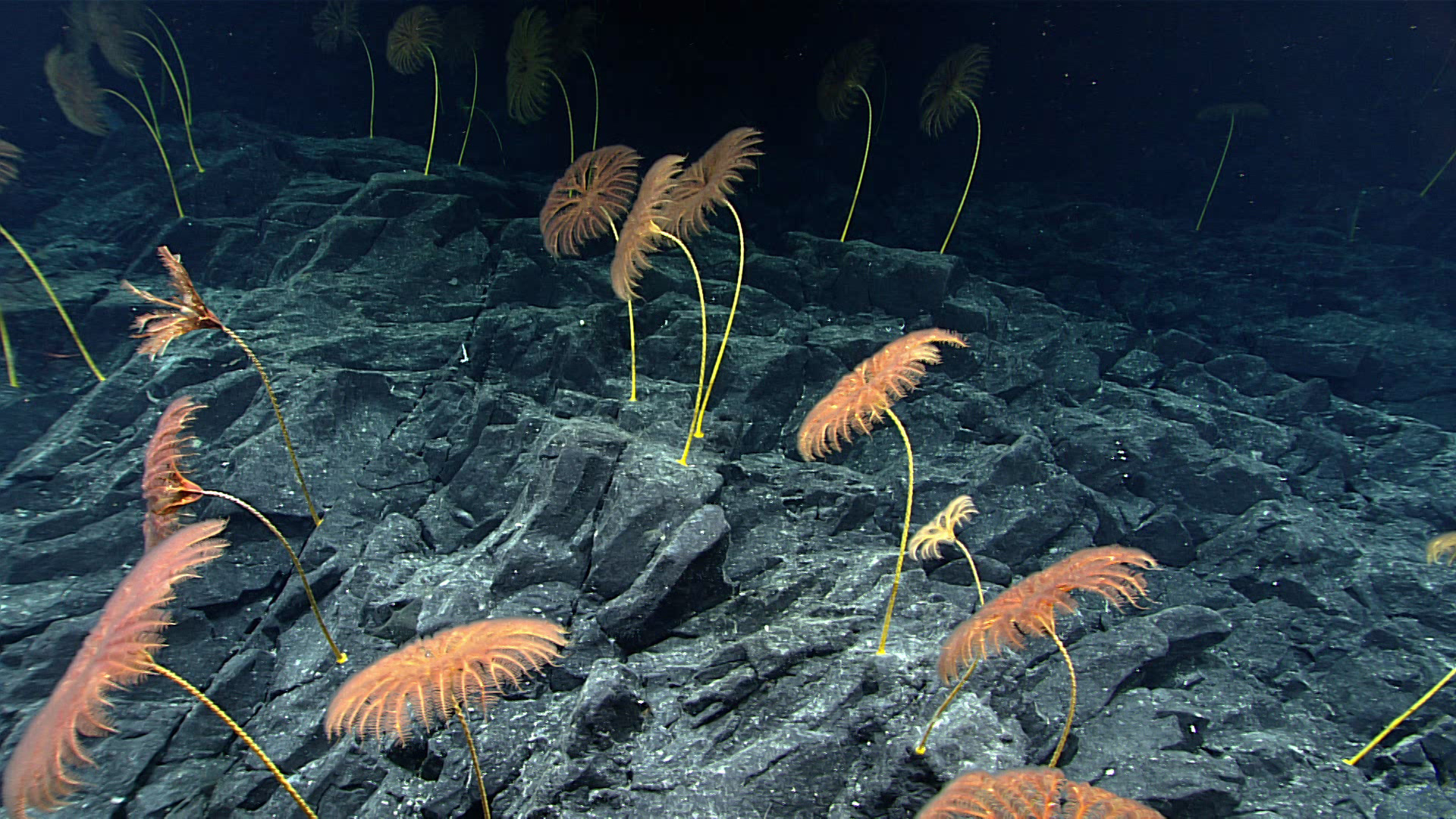
Sea lilies. Photo credit: NOAA-Office of Ocean Exploration, 2025 Beyond the Blue
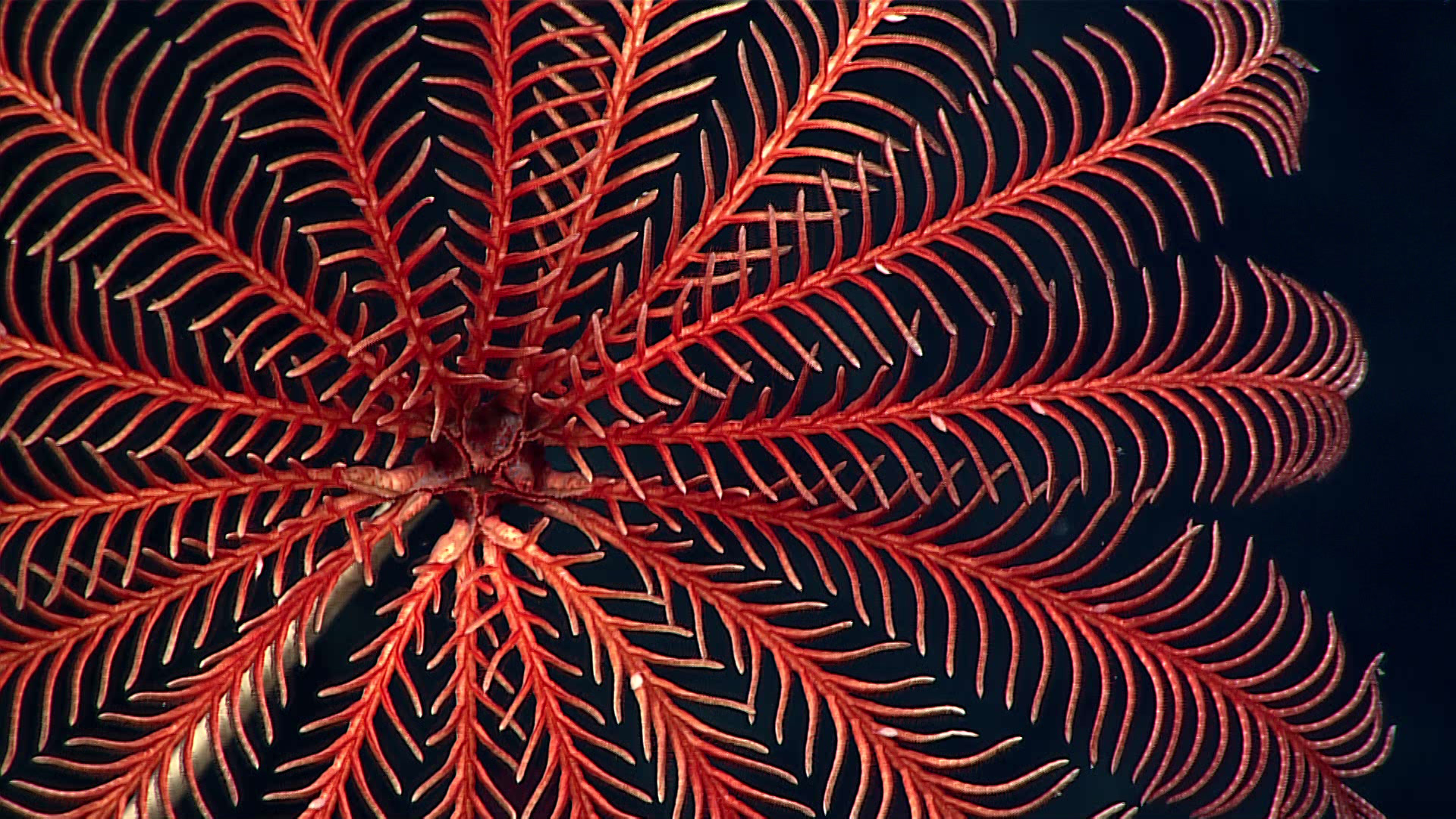
CRINOID found 3,937 feet (1,200 m) below the surface. Photo courtesy NOAA Ocean Exploration, Discovering the Deep Exploring Remote Pacific MPAs.
Sea lilies and feather stars. Such pretty flowers! And a great addition to any Hagfish Day bouquet! But wait! Those are animals, not plants! They’re crinoids. You might know their distant cousins — sea stars,sea urchins, and sea cucumbers.
More than 300 million years before the first flower flowered, sea lilies decorated the seafloor. Today, more than 680 species live throughout the world. Feather stars live in shallower waters, often in coral reefs. Most sea lilies live below 1000 feet.
Crinoids anchor themselves to hard surfaces. Sea lilies have a stalk; feather stars do not. They can let go and travel or move a bit when necessary. Sea lilies use their arms to crawl away.
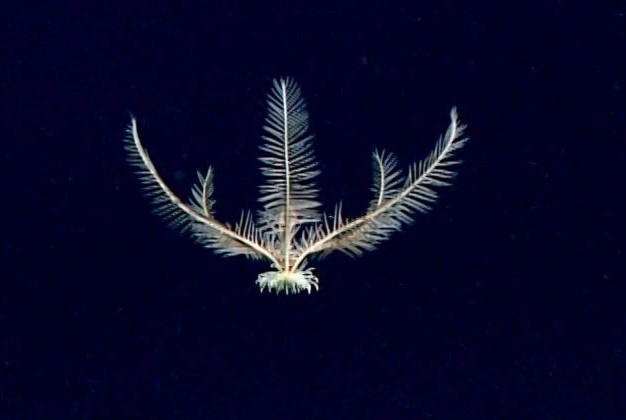
Swimming feather star. Photo courtesy NOAA Office of Ocean Exploration and Research, Windows to the Deep 2019
Feather stars take a fancier approach. They wave their arms to swim to a new spot, then float down like a parachute.
A crinoid’s feathery arms to filter plankton and other bits of food carried through the sea. Some species have 5 arms, others up to 180 arms. Like other echinoderms, these Hagfish Day beauties have the amazing ability to regrow limbs and many of their organs. And they do it fast. They can regrow body parts 2.5 times faster than your hair grows!
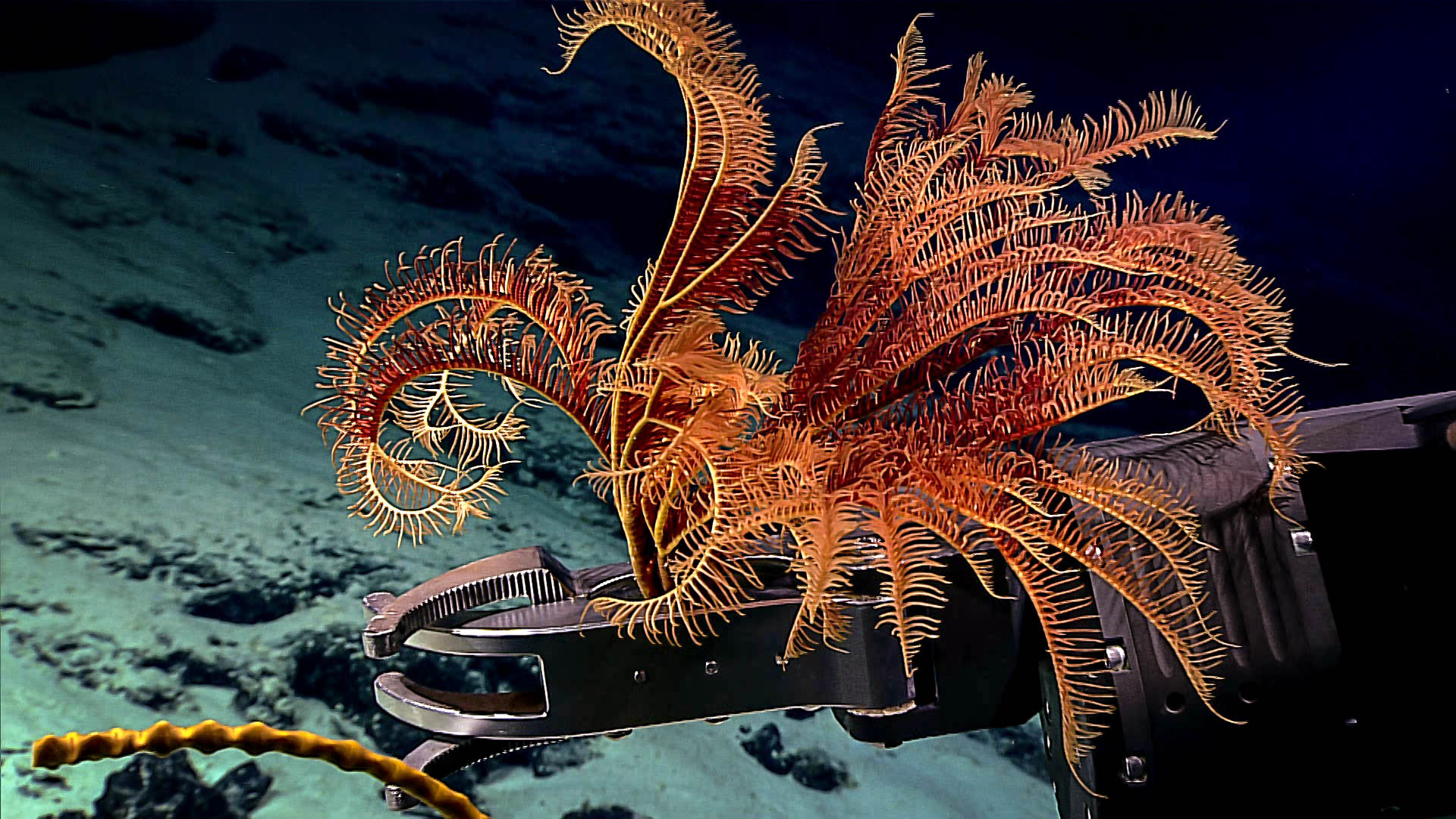
The ROV’s jaws gently grasp a crinoid only found Celebes Sea in Indonesia. Photo courtesy NOAA-OER
Some sea lilies glow—they are bioluminescent. Scientists are not sure why, however, they hypothesize (that’s an educated guess) that the glow might be a lure and/or a kind of burglar alarm. Both common ways deep-sea animals use bioluminesce.
Scientists have discovered more than 5,000 fossilized crinoid species, some dating back 480 million years.
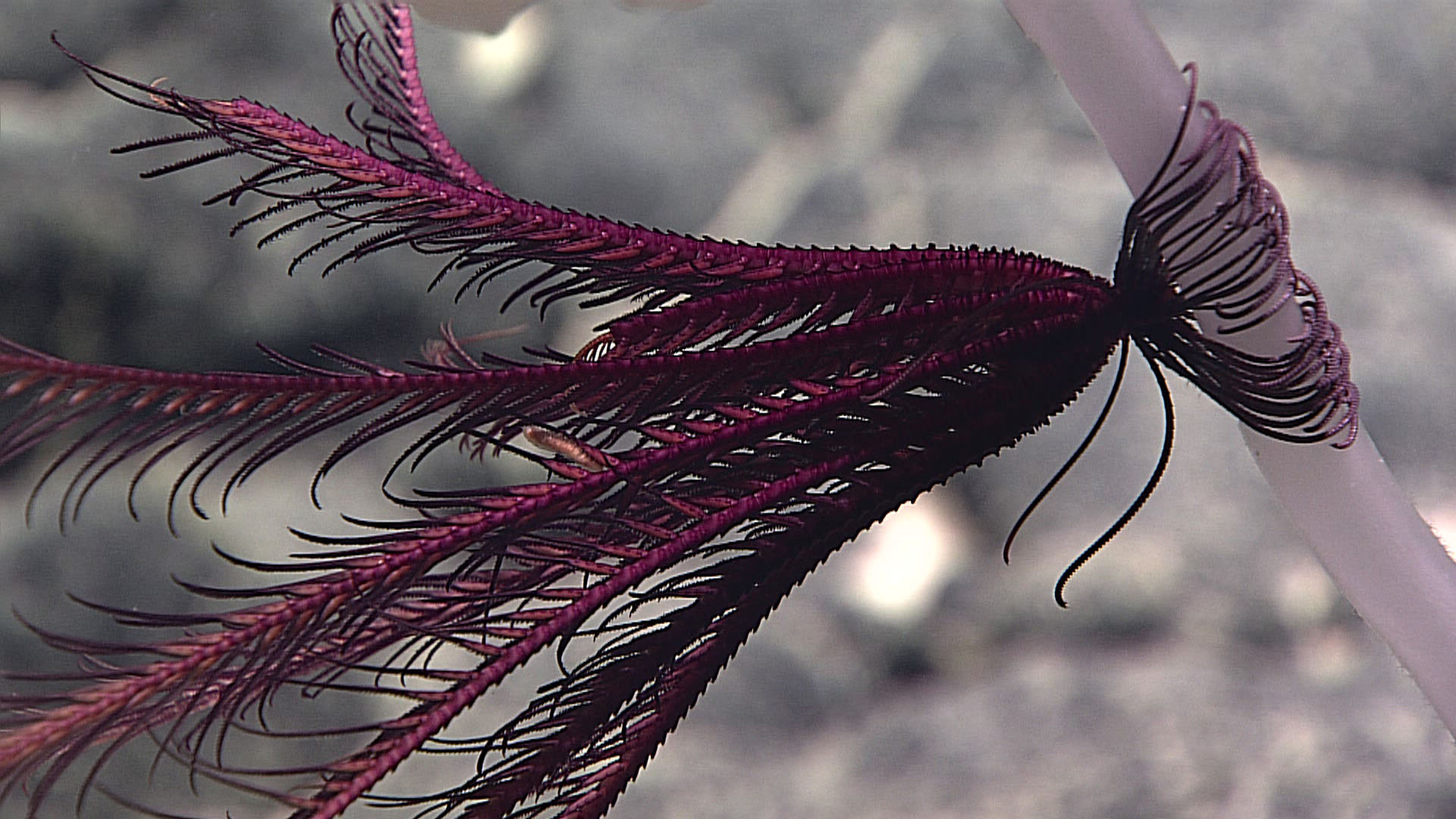
Purple crinoid holding on to sponge stalk with cirri or “little feet.” Photo courtesy NOAA-OE
Back to WhaleTimes’ Hagfish Day Celebration
 About WhaleTimes, Inc.: WhaleTimes creates a connection between the ocean, ocean research, the researchers, and students through formal and informal education programs such as Hagfish Day. This connection ignites a passion for the ocean, inspires students to consider marine science as a career, and empowers kids to protect the ocean. WhaleTimes, Inc. is a 501(c)(3) nonprofit marine science education organization.
©WhaleTimes, Inc. Text by Teresa Klepinger