Dear Virtual Science Team,
We’ve seen so many exotic and amazing creatures it makes me smile just thinking about them. As you know, the deep is a very important home to so many mysterious and marvelous animals.
Some moments, though, cause my smile to fade. At the deepest depths, we see trash. Human created garbage mars the beauty even at the great depths where we’re studying, 6,562 feet (2,000 m).
At this deepest habitat, where there’s so little structure, some of the animals try to colonize on the trash. But as you can see with the anemone wrapped in the plastic, its growth is being warped. We saw fishing line, soda cans, trash bags, and even a big oil barrel.
Now that you’ve helped us explore the deep, you have an important job. Help us keep it clean.
Many people do not realize that everything they do on land affects the deep — from not properly disposing of trash to not monitoring invisible pollutants such as chemicals like the detergents, fertilizers, cars, and other products we use all the time.
How can you help? It’s easy to make a difference. Reduce, reuse, and recycle. Be aware of the products you use that might run from your home, lawn, or driveway into storm drains an into streams and rivers. It all makes it to the ocean.
What do you think you can do to help us protect the deep sea?
Tammy
Dr. Tamara Frank
Chief Scientist and Deep-Sea Explorer
Creep into the Deep Mission:
Bioluminescence and Vision on the Deep Seafloor 2015 Expedition, NOAA-OER
Category Archives: WhaleTimes Updates
Glass Sponge
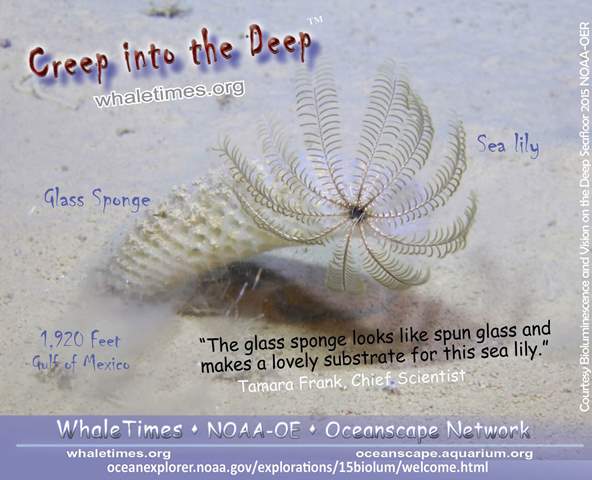
Hello from the Gulf of Mexico. The research cruise is going great and the ROV dives successful. Here are a couple more gorgeous creatures we found today at 1920 feet.
I just love this glass sponge. It is so beautiful, like spun glass. With the sea lily on top, it looks like such a delicate flowering plant. A sea lily is in the same group as seastars and sea urchins. In a world with very little substrate (stuff on the ground), the sponge makes a lovely substrate for a sea lily.
As we were collecting the glass sponge, we saw yellow things inside. We asked the ROV pilot to tip the claw towards us (the camera) so we could see what they were. They were tiny amphipods (relatives of shrimp). These glass sponges always seem to have amphipods or shrimp associated with them. Often, the spicules of the sponge close off the opening. The shrimp (sometimes a pair of male and female) are trapped inside. They do quite well because they’re filter feeders like the sponge. The sponge is in the right position to capture food carried by the current, which means the amphipods inside can too.
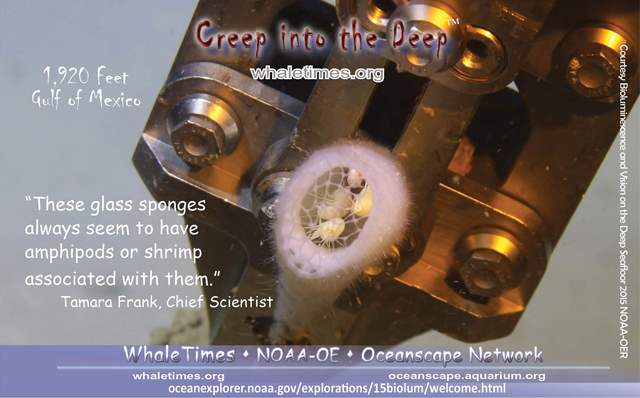
In some cultures, the glass sponge and the mating pair of crustaceans inside, are dried and given as a wedding gift as a sign of everlasting love. It’s called a Venus Flower Basket.
I wonder what we’ll find on our next dive!
Cheers
Tammy
Dr. Tamara Frank, Chief Scientist and Deep-sea Explorer
Vision and Bioluminescence in the Deep-sea Benthos II, NOAA Ocean Exploration
Meet the giant isopod
Hello Virtual Science Team Members and friends,
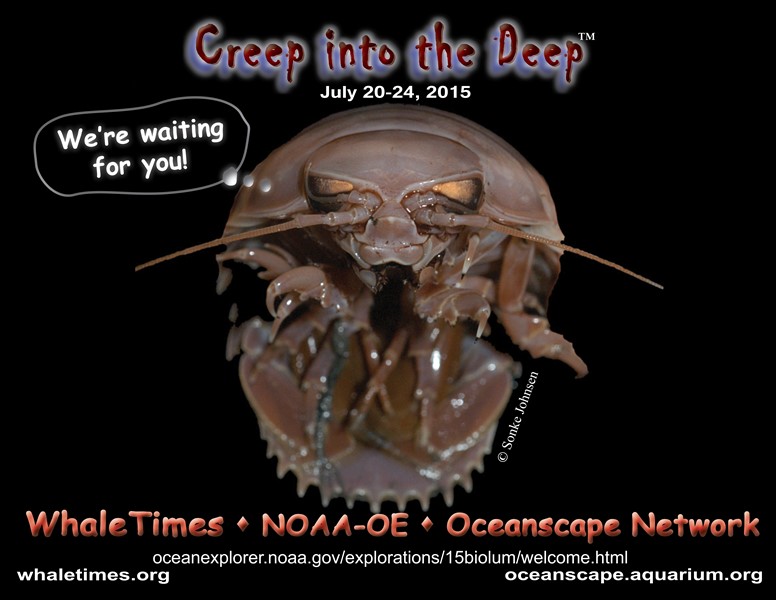
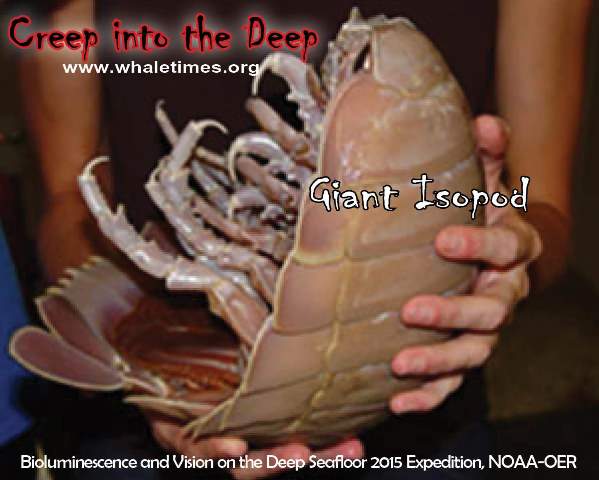
This is a giant isopod, a deep-sea scavenger about the size of a small dog. Does it look familiar? It might. Perhaps you’ve seen one in your backyard. Well, not as big as this, but a much, much, much smaller version. It’s a distant relative of the giant isopod. You might call it a roly-poly or a pill bug. it eats rotting fish or animal carcasses it finds on the ocean floor. Yum!
Not only is the giant isopod a delightful critter with an unusual diet, it has fascinating eyes. Our Creep into the Deep Science Team is studying both bioluminescence and vision in the deep. The science team wants to learn more about these incredible creatures and how they survive in the darkest deepest parts of the sea. They suspect that the giant isopod’s slow compound eyes help it see the dim mats of bioluminescent bacteria that dust the ocean floor. We can’t wait to learn more, too!
The Oregon Coast Aquarium’s Oceanscape Network created a fun video for you. Enjoy!
Jake, the SeaDog
Video courtesy of the Oregon Coast Aquarium’s Oceanscape Network
Read more about the Creep Into The Deep Science Team (pdf)
Meet our Creep into the Deep Science Team
Watch other videos about the deep ocean.
Follow the Creep into the Deep Mission
Seamail: July 20, 2015
July 20, 2015
Dear Virtual Science Team Members…
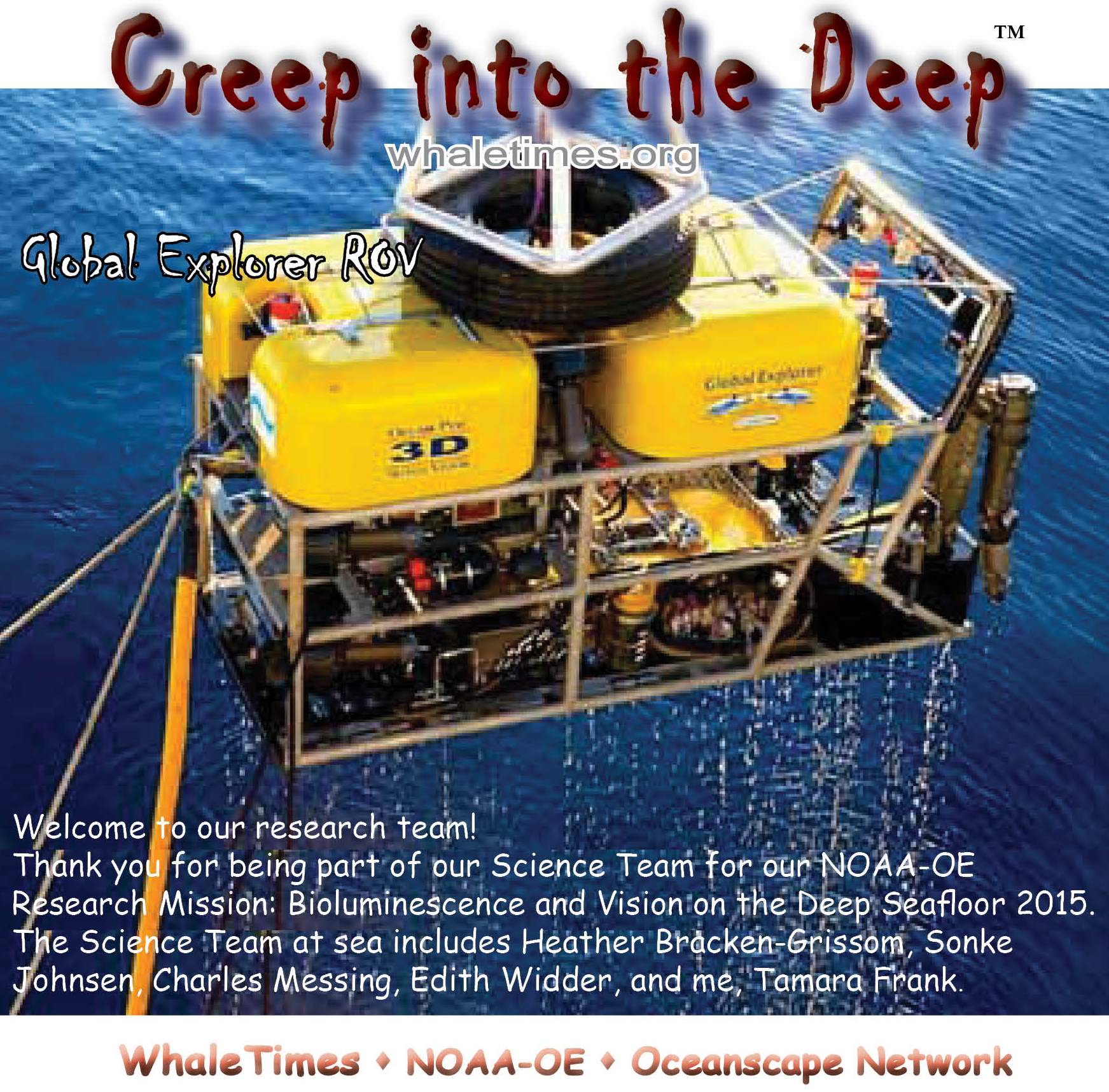
Welcome aboard our research team! Thank you for being part of our Science Team for our NOAA-OE Research Mission: Bioluminescence and Vision on the Deep Seafloor 2015. The Science Team at sea includes Heather Bracken-Grissom, Sonke Johnsen, Charles Messing, Edith Widder, and me, Tamara Frank.
On July 14th, we traveled to Cocodrie, Louisiana to board the Research Vessel (RV) Pelican. We spent one day in port setting up all of our equipment, including the Global Explorer ROV. The Global Explorer, about the size of a small mini-van, needs to be lifted by a crane aboard the ship. Once it was on the ship, all the connections needed to be hooked up and tested to make sure that everything works (pilot controls, cameras, lights, hydraulics) before we left the dock and set sail to our first study site.
We’ll spend the next 12 days exploring depths between 3,280 and 4,921 feet (1,000 and 1,500 m) using the Global Explorer ROV. We’ll take photographs and videos and also collect live animals for our studies of vision and bioluminescence.
Only 5% of our oceans have been explored, so every dive is important and full of discoveries. We’re happy we can share this fascinating world with you.
During the cruise, you’ll receive Seamail updates about our discoveries and can ask us questions. You can also learn more about our research and find a map of our dive sites on the Bioluminescence and Vision on the Deep Seafloor 2015 NOAA-Ocean Exploration webpage. Plus, Oregon Coast Aquarium’s Oceanscape Network, and of course, WhaleTimes, will also have photos, videos, and more for you to check out.
I hope you’re ready for an amazing trip!
Cheers,
Tamara Frank
Dr. Tamara Frank
Chief Scientist and Deep-Sea Explorer
Creep into the Deep Mission: Bioluminescence and Vision on the Deep Seafloor 2015 Expedition, NOAA-OER
WhaleTimes: whaletimes.org
Oceanscape Network: oceanscape.aquarium.org
NOAA OE: oceanexplorer.noaa.gov/explorations/15biolum/welcome.html
Meet the Creep into the Deep Science Team!
MEET THE CREEP INTO THE DEEP SCIENCE TEAM: Who’s an expert on what? Who got seasick on their first expedition? Who was the first person to photograph a giant squid in its native habitat? The Oregon Coast Aquarium’s Oceanscape Network created a fun and engaging video to introduce you to our Creep into the Deep Science Team members!
Video courtesy of the Oregon Coast Aquarium’s Oceanscape Network
Read more about the Creep Into The Deep Science Team (pdf)
Follow the Creep into the Deep Mission
Creep into the Deep with us…
Research Project: Vision and Bioluminescence in the Deep-sea Benthos II
Don’t go near the water…until you know how to protect whales!
Stay safe on the water – and respect whales, too. Though we love whales and are often intrigued by them, the feeling is rarely mutual. Especially in the summer when so many people are out on boats, kayaks, and jet skis. If you love whales and want to protect them, enjoy them from a safe distance.
Watch Out for Spouts from Ocean Today / NOAA
Have a fantastic summer!
Jake, the SeaDog
A special thanks to OCEAN TODAY and NOAA for allowing us to share this video with you.
Give a shout out for sharks
Happy Fintastic Friday: Giving Sharks, Skates and Rays a Voice!
Fintastic Friday celebrates sharks and encourages everyone to find ways to change public opinion about from hatred to love and fear to appreciation. Think of it as Earth Day for sharks!
Why a day for sharks? Shark, ray, and skate populations throughout the world are in peril, some threatened and others critically endangered. All of them need more people to care.
We know people and scientists can encourage governments to save sharks the same way they pushed for protection of whales so long ago. In fact, there are many countries stepping up to protect sharks by creating sanctuaries for sharks, but more need to be part of the solution.
To celebrate we want you to meet just a few scientists and organizations working to protect sharks, skates, and rays throughout the world. We suggest you send them all a big sharky thank you! (see the Big as Life Thank You idea on our Fintastic Friday page)
- George Burgess, Florida Museum of Natural History
- Dave Ebert, Pacific Shark Research Center, Moss Landing
- Dean Grubbs, Florida State University Coastal and Marine Laboratory
- Rachel Graham, MarAlliance
- Samuel Gruber, Bimini Sharklab
- Alison Kock, Shark Spotters
- Johann Mourier, Shark Biologist
- Mahmood Shivji, Nova Southeastern University
- Generous organizations like Save our Seas Foundation for supporting research throughout the world and the tireless work of the IUCN Shark Specialist Group raising awareness and adding to our knowledge of sharks.
- and the pocket shark for being one more reason to protect the oceans because there’s just a lot of weird and cool critters out there we need to discover and protect (not necessarily in that order)!
This year’s Fintastic Friday dedicated to Eugenie Clark, an inspiration to all of us to protect our oceans. Thank you.
Get the word out! Share or Like Fintastic Friday on the WhaleTimes Facebook page
Celebrate Fintastic Friday this week!
Fintastic Friday: Giving Sharks, Skates, and Rays a Voice, one of the best holidays ever, is this Friday!
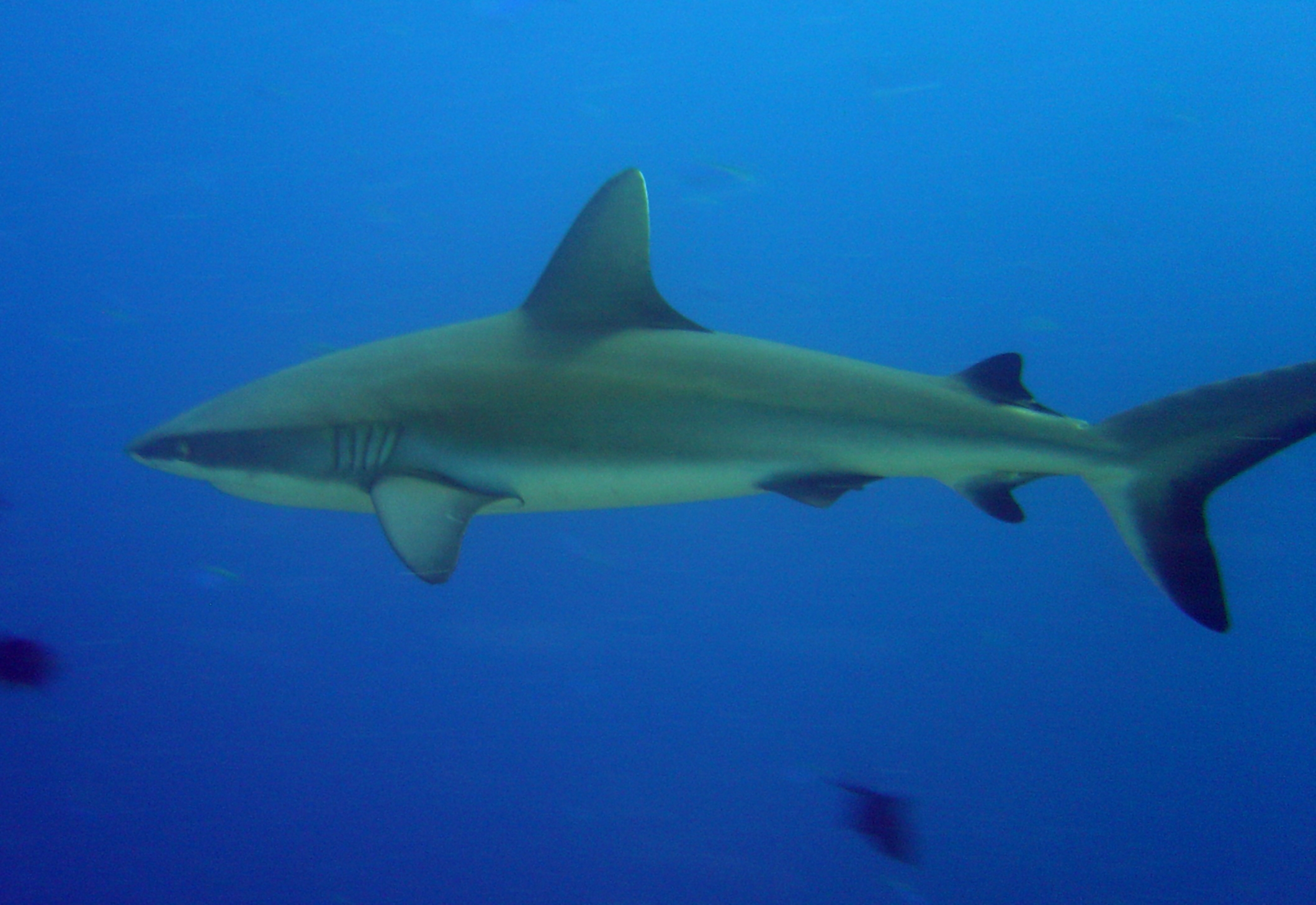
Sharks, Skates, and Rays have roamed seas and rivers for…well…practically forever! Their elegant adaptations, from nose to tail, are extraordinary. Their dignified beauty often goes unrecognized or misunderstood. That’s why sharks, skates, and rays are in trouble. Overfishing, finning, habitat destruction, and pollution have put many species in peril, threatening them with extinction. They need people who care to raise their voices.
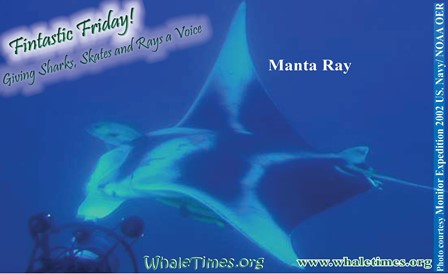
What can you do? Let people know the real shark, the tiny lanternshark deep in the sea glowing quietly. The quirky cookiecutter shark taking bites out of whales ten times its size. The gigantic basking shark slurping plankton at the surface. What about the incredible manta ray gracefully dancing through the water? Who doesn’t love the toothy snouts of sawsharks and sawfish? All of them need our help.
Sharks have many fans, but many more people who do not appreciate or understand them. That’s the purpose of Fintastic Friday, to let people know the real animal.
Get Zoned signs. Print and post on your door, at your school, local store or where ever you can. We have two versions One with a yellow background, one without so you can print it on any color paper you want.
WhaleTimes Fintastic Friday Shark Conservation Zone Poster (no background)
WhaleTimes Fintastic Friday Shark Conservation Zone Poster (yellow background)
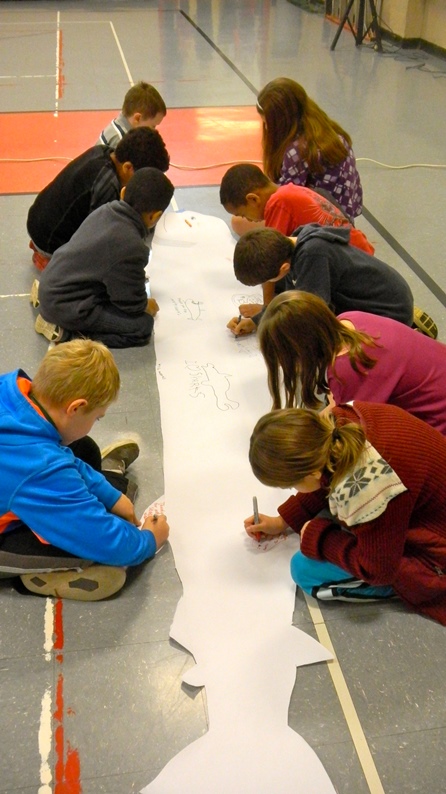
What else can you do? Create, write, and send a “Bigger as Life” thank to your favorite shark, skate, or ray expert.
Create some shark art, or even have a Sharks in the Park Rally. Find out more on our Fintastic Friday page
Let’s save sharks by celebrating them! Happy Fintastic Friday
Get the word out! Share or Like Fintastic Friday on the WhaleTimes Facebook page.
Join us at the DEEPEND!
Joins WhaleTimes at the DEEPEND, no floaties required!
Our DEEPEND Science Team is at sea, right now! Follow the ship (May 1 to 8th) on the DEEPEND Consortium website.
That means, WhaleTimes’ first set of Postcards from the DEEPEND will be arriving soon!
WhaleTimes is excited to be part of the DEEPEND Project…a consortium of amazing scientists and organizations studying the Gulf of Mexico deep sea.
WhaleTimes will share the DEEPEND science, technology, engineering and math (STEM) with you through our
- Creep into the Deep Virtual Research Missions
- Postcards from the DEEPEND
- Taking Science Deeper Curriculum
…and so much more. Find out more